


PG&E

TV News still showing active fire in Orange County
Energy

New California fires caused by electricity grid – SoCal confesses

Oct. 28—Thousands of Southern Californians were without electricity for a third  day Wednesday, as the region’s largest utility turned off power to areas where strong Santa Ana winds were causing high fire risk.

Power company Southern California Edison told state regulators that its equipment might have ignited one of a pair of fast-moving wildfires in Orange County, Calif., that have prompted evacuation orders for 80,000 people.

A few miles to the north, the Blue Ridge Fire also broke out Monday and has blackened more than 10,000 acres and led to evacuation orders for the city of Yorba Linda. Both conflagrations were driven by Santa Ana winds gusting up to 80 miles an hour. In all, more than 16,000 homes valued at $14.1 billion were at risk from the twin fires, according to estimates by Realtor.com.

Simultaneously About 355,000 power customers – covering an estimated 1 million people – were in the dark in the northern part of the state as officials issued warnings for what could be the strongest winds in California this year.

The fast-moving wildfire forced the evacuation of 70,000 people and seriously injured two firefighters in Southern California on Monday as powerful winds across the fire-fatigued state prompted power to be cut to prevent utility equipment from sparking new blazes.

The wind-driven fire spread to more than 16 square kilometers within a few hours of breaking out around dawn in Orange County, south of Los Angeles.

Strong gusts pushed flames in Silverado Canyon and near houses in Irvine, a city of about 280,000 residents 65 kilometers southeast of Los Angeles.

Two firefighters, aged 26 and 31, were severely burned as they battled the blaze from the ground, Orange County Fire Authority Chief Brian Fennessy said.

Water-dropping helicopters were briefly grounded because the winds made it unsafe to fly.

Officials did not immediately know the cause of the fire, one of several that broke out across the region.

Tinder-dry weather

The electricity shutdowns marked the fifth time this year that Pacific Gas & Electric, the nation’s largest utility, cut power to customers to reduce the risk of downed or fouled power lines or other equipment that could ignite fires amid tinder-dry weather conditions and powerful wind gusts.

The conditions could equal those during devastating fires in California’s wine region in 2017 and the Kincade Fire that devastated Sonoma County north of San Francisco last October, the National Weather Service said.

Fire officials said PG&E transmission lines sparked that fire, which destroyed hundreds of homes and caused nearly 100,000 people to flee for their lives.

Extreme fire danger moved into Southern California late on Sunday following cooler temperatures over the weekend. A area north of Los Angeles recorded a wind gust of 156 kilometers per hour.

“We have very strong winds and very low humidities, and that’s causing ideal conditions for a very strong Santa Ana event with …

Read More »
Land

PG&E’s cunning wildfire plan – shut down the Grid

Power company PG&E has long been known as a company that puts its shareholders interests ahead of its customers – shady billing practices, low quality maintenance are just a couple of the company’s bad practices.

Now it has gone a step further with a plan to punish its 15 million Californian customers in the event of wildfires this summer.

When high winds arise this year, the utility says it will black out fire-prone areas that are home to 5.4 million people.

That’s right – instead of working 24/7 to prevent its power lines from sparking the kinds of wildfires that have killed scores of Californians. it plans to pull the plug on a giant swath of the state’s population.

No U.S. utility has ever blacked out so many people on purpose. PG&E says it could knock out power to as much as an eighth of the state’s population for as long as five days when dangerously high winds arise. Communities likely to get shut off worry PG&E will put people in danger, especially the sick and elderly, and cause financial losses with slim hope of compensation.

In October, in a test run of sorts, PG&E for the first time cut power to several small communities over wildfire concerns, including the small Napa Valley town of Calistoga, for about two days. Emergency officials raced door-to-door to check on elderly residents, some of whom relied on electric medical devices. Grocers dumped spoiling inventory. Hotels lost business.

PG&E is “essentially shifting all of the burden, all of the losses onto everyone else,” said Dylan Feik, who was Calistoga city manager until earlier this month.

By shutting off power in fire-prone parts of its service area, which are home to 5.4 million people, PG&E said in regulatory filings it hopes to prevent more deadly wildfires. The San Francisco-based company sought bankruptcy protection in January, citing more than $30 billion in potential damages from fires linked to its equipment.

This plan amounts to an admission by PG&E that it can’t always fulfill its basic job of delivering electricity both safely and reliably. Years of drought and a drying climate have turned the state’s northern forests into a tinderbox, and the utility has failed to make needed investments to make its grid sturdier.

During this year’s wildfire season, which typically starts around June, PG&E is preparing to make cutoffs to a far larger geographic region than it has targeted for blackouts in the past, increasing the number of potentially affected customers nearly 10-fold. While it is unlikely all areas would be affected at once, the outages may turn entire counties dark.

SHARE YOUR THOUGHTS
What should utilities do to protect people from wildfires? Make your comments below.

The company said it is attempting to figure out how to avoid stranding medically vulnerable residents and is working with local authorities to try to ensure water, traffic …

Read More »

Editorial: Don’t hit small solar with new fees in California

Those solar panels you’ve seen glinting on your neighbors’ rooftops throughout California?  If the state’s investor-owned utilities get their way in negotiations with the Public Utilities Commission,, you’ll be seeing a lot less domestic black silicon in the future.

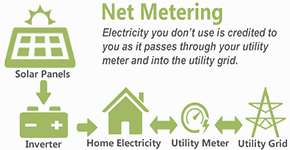
That’s because big utilities are petitioning to radically alter the rules about net metering, the system by which homeowners, schools and businesses that generate excess electrical capacity on a sunny day sell their unused power back to the grid, the same as the utility companies sell it to the rest of us.

Our big power suppliers have the same right to operate under a fair business model as the small homeowner who makes an investment in solar. Few of the latter, except isolated cabin owners and the like, are ever really “off the grid” entirely. They make use of electricity sold to them by Southern California Electric, PG&E and the state’s other large private firms as well, or buy it from the city-owned utilities in cities such as Los Angeles, Pasadena, Burbank and others that operate municipal, taxpayer-owned nonprofit power companies. It’s the big utilities that have to operate the grid — the complex system of power lines, from the big ones coming down from Tehachapi wind farms, Utah coal plants, dams with hydro plants and the like to the small wires that come into your own homes.

But even though those big firms still control 97 percent of the electrical power market in California, they are worried about the tiny but growing group of homeowners and businesses in the state that have chosen to generate some of their own power. So they have a proposal before the California Public Utilities Commission targeting net metering by making it more than twice as expensive for the little guy through fees and smaller payments.

netmeterprocessThose electrons are sold back to the rest of us at the same rate as electricity made by the utilities. So even though it’s true all of us have an interest in maintaining the grid, the proposals are not only not fair — the solar-panel installation industry says it would deeply harm their own business model. And this is not just about staying in business. As U.S. negotiators prepare to head to the Paris talks on climate change next month, all of us have an interest in creating a country with fewer carbon emissions that lead to global warming.

When a similar measure to the one before the PUC was approved in Arizona recently, the solar industry said it saw an immediate 95 percent decline in its business. Homeowners said that it no longer penciled out for them to invest the $15,000 or so it costs to go solar and recoup their invest- ment through energy savings over 10 or so years. Hawaii just passed an anti-solar bill after intense lobbying by that state’s largest utility, and …

Read More »