
off the grid living

Land

The Off-Grid Solution to Social Distancing (says Reuters)

Couple living alone in wilderness for decades -REUTERS SPECIAL REPORT-

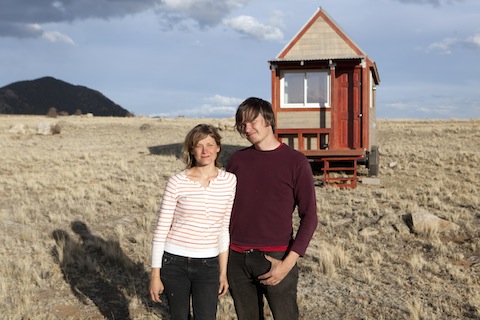
SOMEWHERE NEAR RESERVE, New Mexico, June 5 (Reuters) – To leave society behind was a wedding vow Wendell and Mariann spoke only to each other. It was a solemn one, though, and to save for it Mariann spent only $66 on her bridal gown. Once they were married on that winter day 35 years ago, they just started driving.

Wendell and Mariann Hardy had lived most of their lives in the fast-growing southwestern city of Tucson, Arizona. But each was drawn to solitude. Mariann began distance-running into the mountains on high desert trails. Even before they met, both relocated to log cabins up on Mt. Lemmon, the 9,157-foot peak in the Catalinas range that overlooks Tucson. Still, city types came up to party there on the weekends. It wasn’t isolated enough.

Wendell took a job installing windows at Mariann’s cabin. Shy at first, the two got to talking about how they weren’t made for crowded places. One afternoon, Mariann offered him gin and tonic. Just how far, Wendell asked her, would she be willing to go?

In search of solitude

The question, open-ended and thrilling, marked the beginning of a union between two people who sought solitude – and instead found a life alone together.

Decades later, a pandemic has thrust the concept of social distancing into the daily lexicon and lives of Americans. As the nation’s death toll from COVID-19 tops 100,000, a new reality has set in: With few effective treatments and no vaccine, maintaining distance from others in society is the only sure method of stopping the spread.

Few people are as accustomed to the rigors, or rewards, of sheltering-in-place as Wendell, 75, and Mariann, 69. Soon after their 1985 church wedding in Tucson, they started exploring the wildest reaches of the American West for a place to be on their own.

A jack of all trades, including driving race cars, Wendell had a knack for fixing up vehicles like their salvaged pickups and a 1978 Jeep. They’d load one up and scout out Arizona’s parched borderlands to the south, and its ponderosa pine forests up north.

You can tell something by how couples sit on bench seats in old pickup trucks. Some sit apart, at either window. Others, like Wendell and Mariann, sit close together, behind the steering wheel.

Their search ended in Catron County, New Mexico. It is among the most rural in the United States, bigger than some U.S. states. Elk outnumber people 4 to 1. Traffic is so sparse, the county doesn’t have a single stoplight. Some children wait for the school bus in wood and wire cages. These serve as a precaution, against the wolves.

Miles down a washed-out dirt road along the San Francisco River, they saw 25 acres for sale. The $40,000 stretch of land, 6,000 feet high and zoned …

Read More »
Spirit

Scotland’s multiple off-grid opportunities

The sparkling glens and mountains of Scotland boasts a wide choice of off-grid holiday accommodation and if you fall in love with the lifestyle there are many off-grid homes and jobs jobs that could make your stay a lifelong one.

The remote community of Scoraig is looking for a teacher and there are always numerous jobs as gamekeepers, loggers and crofters.

Scotland is the perfect place for those keen to explore the great outdoors. From eco glamping to living like a laird and lady, here’s a pick of where to stay.

Try the island of Tiree

Were it not for the charming croft cottages, the disarming Hebridean accents and the inimitable grass coverage of Scottish dunes, anyone on Tiree might easily imagine themselves on Hawaii. This is in fact Scotland – the most westerly of the Inner Hebrides has long, white-sand beaches, plentiful hours of sunshine and excellent surfing and windsurfing. Being within tickle’s reach of the Gulf Stream means the waters are startling not for their cold but their warmth.

Accommodation is mainly B&B or self-catering.

Traditional Yurts

The Three Trossachs Yurts offer cosy glamping in a picturesque setting.

Each circular dwelling sleeps up to four adults or a family of five and are decorated with thick rugs and soft furnishings.

This experience is all about being off-grid, so it’s self-catering only, but there are plenty of options for cooking your own meals.

www.trossachsyurts.com

Caravan Cavalcade

The six French roulottes that make up Roulotte Retreat can be found in the idyllic surroundings of a wildflower meadow in the Borders.

The roulottes – hand-crafted, Romany-style, wooden caravans – are colourful, stylish and quirky, and come equipped with modern comforts.

The setting is just as impressive, offering easy access to the towns of Melrose, Selkirk, Jedburgh and Galashiels, with the River Tweed flowing nearby.

www.roulotteretreat.com

Life in a lighthouse

Sumburgh Lighthouse is the oldest lighthouse on Shetland and featured in the Shetland TV drama.

The self-catering accommodation is sited within the complex of lighthouse buildings on the majestic cliffs and is finished to a high standard.

It’s particularly popular with holidaymakers during the summer months. www.shetlandlighthouse.com ECO PODS

In the shadow of a castle

The two wooden eco pods at Craskie Estate are perfectly placed for stunning loch views and soaking up the beauty of the Highlands.

Efficient insulation and low wattage electrics mean a minimal carbon footprint but there is no shortage of luxury touches.

Sleeping up to four people, each pod has its own decked terrace – ideal for al fresco dining.

www.craskieestate.com

Off-Grid jobs

And while you are in Scotland, consider a visit to the remote community of Scoraig, which is currently looking for a teacher for its primary school.

The locals say it’s the least stressful job in teaching but the post has fallen vacant three times in the past five years. The school’s head teacher is …

Read More »
Coolio at the Great GoogaMooga Festival
People

Coolio ‘preparing to live off the grid’

American Rapper Coolio has told a newspaper he is preparing for a social collapse and plans to end his days off-grid.  “I’ve acquired knowledge of people and the world — knowledge that will help me survive in any given situation” he told the SundayTimes. ” I can track stuff. I can fix a car. I can build a house. I could build a wind turbine if I wanted to.

“I’m preparing to live off the grid, without electricity, air conditioning and heat. You could say it’s preparation for an apocalypse or a natural disaster. The poles are shifting and I’m not optimistic about the future,” he said.

Coolio,  best known for his hit single Gangsta’s Paradise, would like to get rid of the entire tax system — and believes tax is illegal under the US constitution.  “If I was in charge, I’d get rid of tax completely. I’d get rid of money too. I’d go back to the barter system. In my opinion, and according to the constitution of my country, tax is illegal.”

The Grammy award-winner, who says he is not on good terms with the Internal Revenue Service (IRS), believes investing in people, gold and diamonds is the best way to save for his retirement. He admits, though, that he has an expensive shoe habit and buys a pair “at least once a week” — sometimes for as much as $1,000 [£785].

He does not personally own any property – “Property can be taken away from you by “eminent domain” [the right of the government to seize your property]. That can happen to anyone in America. I’m going to put all my money in people, gold and diamonds.

 “As for gold and diamonds, that’s something you are always going to be able to use to get food and water. I’m thinking ahead to the time when a bottle of water is going to cost $10. Hopefully, I won’t live that long, but I think that time will come.

Back when he was starting, said Coolio “to make ends meet, I hustled. I sold things: drugs, shoes, jewellery, whatever I could get my hands on. The name of my first album was It Takes a Thief, you know? I’ve been around the block a few times. It made me determined — determined to not live like that for the rest of my life. I got mad at myself. I told myself: “You should be doing better. You’re smart enough — you should be Steve Jobs [the founder of Apple] or someone like that. Get off your ass and go get some money.

“I had to sleep in my car. Sometimes I didn’t have enough money to pay the rent and would get thrown out of where I was living. Other times, I went hungry. I was fortunate in that I had good friends around me who would …

Read More »
Sun tax, Spain, Off-grid, solar panels, tax, grid
Solar

Spain’s Sun Tax to be axed

In October 2015, Spain’s Council of Ministers approved a controversial tax on those using electricity produced by their own solar installations. However, a new government says solar panel owners could soon see the back of the so called sun tax.

What is the sun tax?

This legislation causes those with self-consumptive photovoltaic systems to pay the same grid fees as those without solar panels. This covers the power contracted from an electricity company. But they also have to pay a second “sun tax” which means solar panel owners pay for the electricity they generate and use from their PV systems, even though it doesn’t come into contact with the grid.

There are other facets of the legislation which also caused more outrage. Photovoltaic systems up to 100 kW are not able to sell any excess electricity they produce. Instead, they must “donate” the extra to the grid free of charge. Systems over 100 kW must register if they wish to sell the extra electricity. Community ownership of PV systems, of all sizes, under this legislation is prohibited. Not only this, but the legislation is retroactive; meaning installations prior to the introduction of the tax must comply. If the conditions are not met, then the PV system owners are subject to a penalty fee of up to €60 million ($64 million). To put this in perspective, this is twice the penalty of a radioactive leak from a nuclear plant. Unsurprisingly, this caused outrage.

Exceptions to the tax

There are some circumstances where the tax does not apply. Fear not off-gridders, this tax is only for those connected to the grid. If you run an off-grid system then no grid tax needs to be paid at all. Installations smaller than 10 kW are also exempt from paying the second sun tax. The Canary Islands and the cities of Ceuta and Melilla (Spanish territories in Africa) are also exempt from the second tax. Mallorca and Menorca pay the second sun tax at a reduced rate.

The Spanish government defended the legislation by saying the fees contribute to overall grid system costs. However, the Spanish Photovoltaic Union (UNEF) pointed out how uneconomic the new law was. Their spokesperson stated, “Each kWh imported from the grid by a self-consumer will pay double the tolls compared to a kWh imported from the gird by another consumer.”

Change on the horizon

The current legislation is an unnecessary burden placed upon solar consumers who want to be more economical and environmentally friendly. This has been recognized by opposing political parties and other unions and consumers. The political party which initially brought in the sun tax is now a minority. Therefore, there is now the opportunity for all opposing parties to remove this expensive and impractical legislation.

In January 2017 a law proposal was registered in congress, beginning the process of the sun tax removal. The urgent changes …

Read More »
Hut, Scotland, Building Regulations, Bothies, Off-Grid
Self-Sufficiency

Return of the Scottish Hut

If you fancy buying an inexpensive off-grid getaway in Europe – try Scotland.

The government announced changes to their building regulations early this year. This will include huts of up to 30m² becoming exempt from regulations, specifically aimed at making it simple for people to achieve a life off the grid.

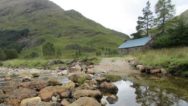
In a few months, you could be gazing out from a building like the one in the picture for less than $25,000 inclusive.

Scotland has a strong hutting culture dating back to the early 20th century; it was only 60 years ago that this began to dwindle. The largest remaining hut community in Carbeth, near Glasgow, managed to weather this decline. The community bought the land on which their 140 huts stand in 2013. But now resurgence is happening, thanks mainly to the campaign A Thousand Huts championed by the environment organisation Reforesting Scotland.

This organisation recognises the benefits of hut life, offering a retreat for rest, recreation, enjoying nature and making memories with family. Alongside use as a base for outdoor activities, huts contribute to sustainable development and encourage learning new skills. Reforesting Scotland have been lobbying for changes to the law for some time and are keen to encourage more people to adopt the hut lifestyle. Now changes to building regulations are being finalised this year, more people can benefit from having their own off-grid getaway.

Scottish planning (zoning) policy requires all developments to get planning permission for a new build from their local authority. This involves providing a description of plans on the chosen location. This part of the process will not change and will still have to take place.

However, single storey huts will no longer need a building warrant or have to comply with strict building regulations. This gives hut builders more freedom in how they build their huts and can significantly reduce building costs. There are still some rules which will have to be met.

Firstly, the build must fit the description of a hut as given in Scottish Planning Policy documents, which is as follows:

“A simple building used intermittently as recreational accommodation, having an internal floor area of no more than 30m²; constructed from low impact materials; generally not connected to mains water, electricity or sewage; and built in such a way that it is removable with little or no trace at the end of its life.”

By restricting size, the risk of structural instability of the hut is reduced but its energy efficiency is maximised.

Secondly, some health and safety regulations will have to be met, for example relating to fire risk and spread. A guidance document outlining these will be published by Reforesting Scotland later this year.

The Scottish Government has also allowed provision for a sleeping platform and amenities such as composting toilets within the hut. In terms of energy use and production, off-grid solutions such …

Read More »
Noam Chomsky supports off-grid film
Community

Please support our Kickstarter campaign to finance off-grid film

We have shot most of our film about the freedom to live off the grid with interviews with Noam Chomsky and other leading intellectuals.
Please spread the word about our film about an eco-village under threat.

Last month the residents of Runnymede Eco-village won the right to appeal at the Royal Courts of Justice in London. See details Latest news on court battle

The film follows 40 activists living in woods next to historic Runnymede where the Magna Carta was signed. We see how they live, and watch them battling for their human rights to live off-grid under ancient laws protecting woodlands.

Please contact us via nick@off-grid.net if you want to help campaign, fundraise or make this film.

Follow this link to see the trailer and the appeal: https://www.kickstarter.com/projects/off-grid/noam-chomskys-magna-carta-eco-village…

Read More »
Cheap living, tightwad, saving money, cutting costs, living cheap, offthegridnews, off the grid, offthegrid, living off the grid
Community

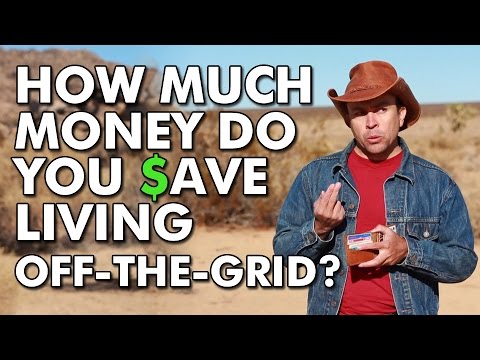
The Bottom Line: Save Money by Living Off-Grid

Cheap living, tightwad, saving money, cutting costs, living cheap, offthegridnews, off the grid, offthegrid, living off the grid Everyone has their motives for moving off-grid. Mine can be boiled down to freedom – and saving money.

This post is a very dirty assessment of how off-grid living has saved me money and can help you do the same.

All my estimates will be for an average 4 person home in the United States. While the results will vary based on country, and locality, the overall premise will remain the same.


Alright, so my disclaimer: I’m not a scientist. I don’t pretend to be and I would rather never be one. I am an average, albeit hyper-logical, American so for my purposes, all of my numbers are very crude. I literally Google searched averages and I used the data from the most reputable looking website that came up. That said, we aren’t working on nuclear fusion, so I think crude logic is enough for our purposes here. Take all the averages with a grain of salt.

Also, I am using my home for the final calculations and comparisons. It is a 1400 sq ft earthbag construction open floorplan home, 50% bermed into a hill, with south-facing windows, and an energy efficient design.  Your home may be bigger or smaller, so again, your numbers will vary.

Land

I will start at the beginning. Land. For our purposes, I will assume both properties will be on the same land. While in real life, someone living off-grid has very different land needs than someone linked-in, land varies in price so much from place to place that we will leave it as a constant in this example.

So both our example houses are built on a $20,000 20-acre plot of land. Difference= $0

Construction of linked-in home: (US avg) $200 per sqft x1400sqft = $280,000

Construction of Off-Grid home: (mine) $36 per sqft x1400sqft = $50,000

Savings: Off-Grid $230,000

Mind you the construction process was much slower and I had to do almost all my work by hand, the savings from construction of a home made of dirt compared to one made of conventional wooden frame and insulation are obvious.

Next are the infrequent expenses.  Listed below are the appliances and expenses that one will have different than the other.

Linked-In Off-Grid
Toilet ea. (conventional) $200 Toilet  (homemade compost) $15
Oil Tank $700 Solar Electric System $10,000
Water Heater (elec) $600 Solar Water Heater $9,000
Space Heating $4,000 Radiant Flooring $5,000
Air Conditioner $750 Cisterns (13,000Gal) $6,400
Total $2,650 Total  $30,415


Difference: $27,765 in favor of conventional homes.  Ouch. The Linked-In setup has a much cheaper initial set-up price but if we look at the difference in cost of construction from above, I think we have this extra expense covered. Let’s see how we do when we look at our long term living expenses.

Linked-In (per year) Off-Grid (per year)
Water (non-toilet) $360 $0
Water (toilet) $109 $0
Space Heating
Read More »
Community

The Process of Moving Off-Grid: How to Begin

coupleConsiderations:

  1. Is off-grid living right for me?
  2. What degree of off-grid living am I comfortable with?
  3. What are my options?
  4. How much money do I have to dedicate to moving off-grid?
  5. Can I cut down and downsize?
  6. Where do I want to live?
  7. What kind of lifestyle can I have there?
  8. What do I need to be careful of?
  9. What do I want to do on my land?
  10. What are my skillsets?
  11. What do I need to learn?
  12. How will I sustain myself over time?


The reason I am emphasizing the decision process so much is because it is the main bottleneck in the process.

People see the appeal of living off-grid and then hesitate because they don’t know how to proceed or even what kinds of things to worry about. My goal is to lay out all the questions and considerations ahead of time because, as a Marine, I firmly believe that the more prepared you are, the easier time you will have, and the more successful you will be.

Long live the prepared!

Read over the questions above. You don’t need to have answers for them just yet but those are ultimately things that you will need to consider over the course of this process. It is a journey, a marathon, not a sprint. It will take time and will be easier sometimes and harder at others. In the end it will be worth it.


The first question is: “Is Off-Grid living right for me”. As I stated previously, I believe everyone should live off-grid to a degree. I want to emphasize that. Some people have more know-how with tools than others. Some people may have responsibilities that keep them in the city or are allergic to sunshine. (It’s a real thing; look it up. I would be devastated.) Obviously these challenges may cause this process to be almost insurmountable. Think to yourself. What is holding you back? What keeps you from advancing? Is it flexible? Is there a way to adapt it to an off-grid lifestyle?


If you cannot adapt your circumstances to an Off-Grid life, then see question 2 above. What are you comfortable doing? Maybe you are in a wheelchair. If so, can you garden in your backyard? I found a video online of an inspiring guy who built raised beds the height of tables in a horseshoe design so he could wheel into his spot, put his chair in park, and spend the afternoon planting without leaving his chair. That’s super motivating for weirdos like me. I don’t know why but I very much enjoyed watching that. I am going to cater my advice towards full-blown off-grid living but I fully support you to do whatever it is that you are comfortable doing and to take things slowly.


Living off-grid means being independent. You no longer rely on others …

Read More »
Community

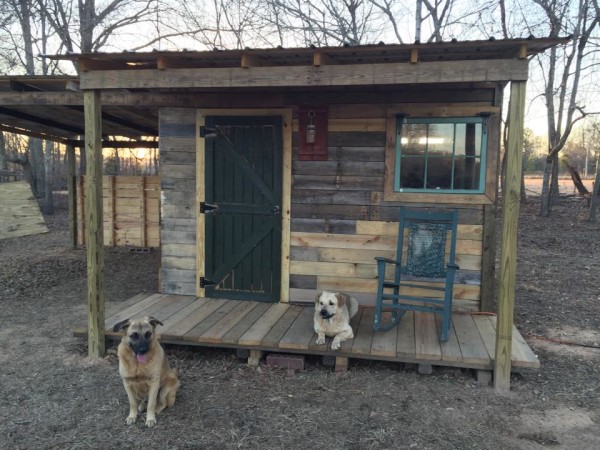
12X12 tiny home made of pallet wood

12x12-tiny-cabin01
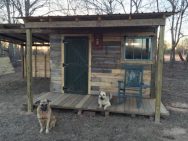
I have handled my fair share of pallets over the years working in warehouses, the ones I’ve worked with were strong, but splintery, I suspect this (and any other pallet wood projects) would require lots of sand paper and elbow grease, but I’m also sure that they would make strong structures if you plan carefully.

This guy built his tiny home (almost) entirely out of pallet wood and other recycled materials. I love that he has the story behind every piece of material he used. Enjoy these two videos.


web statistics


Read More »