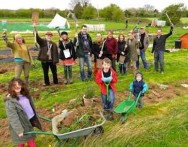


growing food

Community

The Black Farmer Backs Our Call for Land Access

Black Farmer Calls For Church, State And Private Land Owners To Make More Allotment Space Available For ‘Farming Lite’ – 45% Increase In Demand For Allotments Due To COVID-19 Accentuates 18 Month Backlog


THE BLACK FARMER, a Jamaican, born-again country gentleman, has backed our Landbuddy campaign for more renters to get access to small parcels of land where they can grow food, live or work off the grid.

There are an estimated 330,000 allotment plots today in Britain, but up to 500,000 individuals who want an allotment, and in the USA there is a similar shortage of spaces to grow food.

Rather than responsibility for allotment space purely being placed on local towns and counties, The Black Farmer, Wilfred Emmanuel-Jones MBE, says: “The Government, Ministry of Defence, Church of England all own vast swathes of land and could be doing a lot more to welcome people from diverse urban cultures – but particularly black people – into allotments and ultimately into the countryside.”   Overseas companies own 279,523 acres of land in the UK, but this is tiny compared to the tens of millions of acres of land available in the USA.  UK owned holdings in the USA are several million acres.

Emmanuel-Jones was appointed Member of the British Empire (MBE) in the 2020 New Year Honours for services to British farming.

Emmanuel-Jones says: “Tending to my father’s allotment in Birmingham, aged 11, I made a promise to myself that I’d own a farm one day. To me, that small green patch was an oasis and an opportunity to escape from the cramped two-up, two-down terraced house I shared with my family of 11. It took 30 years of hard graft.

“Gatekeepers of pastoral Britain have the power to make a difference and it’s time they were challenged to do so”.

Emmanuel-Jones believes central government should start seeing allotments as part of the answer to national food security and acknowledging the valuable role that they play in raising public health and well-being.

The National Allotment Society recommends that local authorities provide 20 plots per 1000 households. For 20 years, the NSALG has been promoting National Allotments Week (10th – 16th August 2020).

The National Allotment Society (NAS) is the leading national organisation upholding the interests and rights of the allotment community across the UK. His Royal Highness the Prince of Wales is Patron of the Society. The Prince is an avid gardener himself and advocate of green issues, he is also keen to promote and protect the UK’s enduring traditions.

Emannuel-Jones set up a marketing agency in London, specialising in food brands, including Lloyd Grossman, Kettle Chips and Plymouth Gin.
He is married and the couple have a son and a daughter. He has an adult son from his first marriage.
Read More »
Food

Understand Your Growing Zone


Growing your own food, and enough of it to last a while, is one of the pillars of living off the grid. Knowing about your Growing Zone is the key, allowing gardening off-grid to morp from a hobby to something vital to survival. And while there are other ways to put food on the table, gardening provides a balanced diet for the off-grid family as well as exercise and community.

A huge part of living off-grid involves understanding the area in which you are situated. Knowing your surroundings, including the success of past harvests, is essential to creating a garden that will sustain your lifestyle. Here are some tips for understanding your growing zone for a bountiful garden.


Know Your Spot on The Map

Go to map

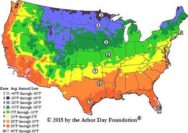
To understand your climate and growing zone, you need to know where your land falls on the USDA Plant Hardiness Zone Map. This useful tool assigns a number to each growing zone within the country. This number corresponds to how well different plants will grow in your area. For example, North Florida is in zone 8, which is great for growing apples. But you’ll have a tough time trying to grow grapes or cherries. Keep in mind that each growing region includes two subcategories as well. It’s possible that a plant that thrives in your growing zone won’t survive because of individual circumstances. However, staying with those plants rated for your growing zone number should help bring forth a bountiful harvest.


Know Your Soil

Another thing to consider when growing a substantial garden is the soil. You may have a wide range of plants in your growing zone, but not everything will do well in the ground on your property. Specific plants prefer a certain kind of soil that your land may not provide. You can add organic material to help fix soil conditions, but that doesn’t guarantee success.


Know Your Season

Northern homesteads will see cooler spring and fall seasons while southern ones will see plenty of hot weather. Different produce grows better in different seasons. It’s best to start out with cool-season vegetables like lettuce, peas, and broccoli well before hot weather arrives. If you’re living in the south, you may have no choice but to start with a warm weather crop like melons, zucchini, and cucumbers. Knowing your area and the average temperature for each season is vital to successfully sow seeds at the right time.


Know Past Weather Patterns

Taking note of past weather conditions within a season will help you understand and work your land better. Prolonged winter temperatures or a freak spring snowstorm can significantly decrease the amount of food that you can produce. Gardeners in Colorado know to wait until after Mother’s Day to plant. Yet the picture above was taken in late May, two weeks after the last forecast frost. …

Read More »
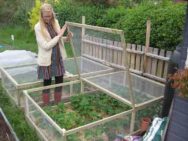
Woman growing strawberries in a covered net box
Food

5 tips on growing strawberries

Are strawberries your favorite fruit?

Want to grow them yourself at home?

Here’s 5 tips on how to grow more strawberries than expected! Practice makes perfect so don’t worry if its your first time gardening.

  1. Make a bed of strawberries. Plant them evenly.
  2. Protect your plants from birds and other critters. Make sure to cover your strawberry bed!
  3. Choose a strawberry cultivar that is known to produce a large berry crop. As most would say, short-day varieties will give you the most strawberries.
  4. Most varieties of strawberries produce runners. These runners will eventually develop their own roots, resulting in a clone plant. Once these adventitious roots establish in the soil, the

    runners begin to dry up and shrivel away. After removing the runners, the plant can absorb more nutrients, which leads to producing more than expected. It’s quite simple to plant strawberry runners. All you have to do is dig around the plant and gently pull it up!

  5. To keep your fruits fresh and healthy, use mulch that decomposes and fertilizes the soil. It will feed your plants and prevent grass and weeds from growing with your strawberry plants.

And there you have it. A bunch of berries! All you have to do now is pick them and enjoy the fresh juicy taste of the red luscious berry. Permaculture experts say that growing asparagus next to your strawberries gives better results.

 …

Read More »
community politics, how to live off-grid, living off-grid, off-grid living
Community

A tale of two smallholdings

The contrasting fortunes of two British smallholdings are a useful guide on how to succeed, and what NOT to do, if you are planning to grow your own food.…

Read More »