
eco village

Regen Villages, Off-grid, Sustainable, Eco-village, eco-friendly
Community

Regenerating the Eco-village

Self-sustaining communities that can talk to each other; sounds like something from the future doesn’t it? But Regen Villages is making this a reality – right now. The first Regen eco-village has begun building works in Almere, 25 minutes from Amsterdam, the Netherlands. The 15,500m² project will house 100 families and aims to be completed by 2018.

But what is a Regen Village?

Founded by James Ehrlich, a senior technologist at Stanford University, in 2015, Regen Villages has a holistic approach. A regenerative system combining new technology and renewable energy powered homes, with organic food production right on the doorstep.

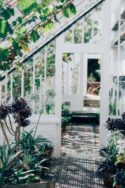
The houses vary in size and are built inside a greenhouse “envelope”, with some even having terraces. Each home has a built in water collection system, solar panels and are passively heated. The community has a seasonal garden, biogas facility and aquaponics amongst other things.

The base of the villages is that the output of one system is the input to another. Waste from the homes is sorted into different categories. Bio-waste is used in the Biogas facility, whilst compost is used as food for livestock and small flies. The flies are fed to fish and the waste from both them and the livestock fertilises the seasonal gardens. The plants in the aquaponics facility and seasonal gardens produce fruit and vegetables for food, whilst the livestock and fish provide a source of protein. Rainwater is collected and stored at the houses and water produced at the biogas facility is also stored. Grey water is separated and used to irrigate the seasonal garden, whereas clean water is put into the aquaponics. Solar cells provide the energy for homes and also to the “smart grid” which can be used for charging electric cars.

Regen Villages, who are partnered with Danish architects EFFEKT, have been termed the “Tesla of ecovillages” paving the way for new innovative developments. Plans include villages being linked up to the cloud and being able to communicate with each other through the internet. In this way communities are self-reliant and off-grid but can still learn from each other.

What about the future?

At a conference held at Sliperiet, Umeå University, Sweden James Ehrlich spoke of the future for Regen Villages. After the completion of the Almere pilot, EU funding of a proposed 300 million euros (approximately $319 million) will enable projects in Sweden, Norway, Denmark and Germany to go ahead. These are aimed to be carried out during 2018-2022. Sights are then set on developments across Malaysia, Saudi Arabia, India, China and parts of the US, with government investments. As Ehrlich outlined, by targeting a challenging cold environment first, Regen Villages can be adapted to suit different climatic needs.

Off-grid sustainable greenhouse communities are not at all futuristic and Ehrlich is keen to make them a reality.…

Read More »
Solar hamlet - artists impression
Community

(eco)Village within a Village

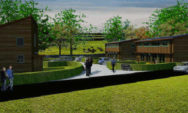
The Welsh Government is embracing low-impact housing with the unveiling of its first village within a village – the Pentre Solar “eco hamlet” within the traditional, stone-walled village of Glanrhyd in Pembrokeshire. The six timber homes have solar panels capable of producing 6000 kilowatt hour per year, low energy use and a A++ energy rating.

Following the successful construction of a prototype house built by start-up Western Solar in 2013, the Welsh Government gave the company £141,000 to help create its nearby production base for the homes, which will house tenants from Pembrokeshire council’s social housing waiting list. With low energy use and access to a shared electric car, Western Solar said residents could avoid up to £2,000 a year on energy costs and consumption.

The eco hamlet was built with insulation material made from recycled paper and local Douglas and Fir wood sourced from the Gwaun Valley. Local people were hired and trained to build the homes, which cost about £100,000 each to build – comparable to a conventional build, according to Western Solar.

About 40% of the fabric of the houses is made in the factory, significantly reducing the build time; it takes only a week to make each house, and less than that to erect it. The company plans to build 1,000 homes over the next 10 years, with the help of partnerships including housing providers and investors.

Welsh Environment Secretary Lesley Griffiths said she was “delighted” to officially open the innovative housing development.
“[It is] not only providing much-needed housing for local people, it is also addressing many other issues such as energy efficiency, fuel poverty, skills development and the use of Welsh timber,” Lesley said.

Low-impact development is recognised by the Welsh Planning system as playing a key role in the transition towards a low-carbon society. Since the ‘One Development Policy’ legislation was introduced in Wales in 2010, it has been possible to build new homes in the open countryside as long as there is a clear commitment for to sustainable living, natural building techniques, and land-based livelihood.…

Read More »

Living in the Future

An ongoing documentary series celebrating sustainable communities and ecovillages around the world is promoting the off-grid way of life. Living in the Future hosts a free online series, a regular blog and a set of three feature documentaries – Ecovillage Pioneers, Lammas and Deep Listening – which follow the development of ecovillages, and communities, around the world.

Ecovillage Pioneers follows filmmaker Helen Iles’s search to find various sustainable, affordable, alternatives to our modern, consumptive way of life. Her journey takes her to a permaculture village in Australia, small communities in Ireland, Somerset and the Gower Peninsula, the more established Findhorn Foundation in Scotland, and the Centre for Alternative Technology in mid-Wales – all projects that inspired Lammas, the UK’s first legal low-impact settlement.

The second film, Lammas: How To build An Ecovillage, shares the highs and lows of the nine trailblazing families who embarked on the pioneering venture to create their homes and a community while dealing with the nightmares of planning applications. After more than six years of planning and construction, Lammas is now a successful off-grid community, spanning almost 50 acres of depleted pasture land in Pembrokeshire, Wales.

Living in the Future’s online series celebrates the innovative and creative individuals who are finding new ways to build self-sustainable houses, including Rachel Shiamh, who won a Grand Designs Award for her two-storey load-bearing straw-bale home in Wales – the first two-storey load-bearing house in the UK, and only the second in Europe.…

Read More »
Noam Chomsky supports off-grid film
Community

Please support our Kickstarter campaign to finance off-grid film

We have shot most of our film about the freedom to live off the grid with interviews with Noam Chomsky and other leading intellectuals.
Please spread the word about our film about an eco-village under threat.

Last month the residents of Runnymede Eco-village won the right to appeal at the Royal Courts of Justice in London. See details Latest news on court battle

The film follows 40 activists living in woods next to historic Runnymede where the Magna Carta was signed. We see how they live, and watch them battling for their human rights to live off-grid under ancient laws protecting woodlands.

Please contact us via nick@off-grid.net if you want to help campaign, fundraise or make this film.

Follow this link to see the trailer and the appeal: https://www.kickstarter.com/projects/off-grid/noam-chomskys-magna-carta-eco-village…

Read More »

Whose Land Is It Anyway?


As the West prepares to celebrate the 800th anniversary of the Magna Carta – the cornerstone of our civil liberties – a small eco-village is under threat.

The Magna Carta stopped a powerful king from seizing the possessions of the rich and powerful barons. It was agreed in Runnymede. In June the Queen and President Obama will join 5000 other dignitaries there.

But in the wood next door, a few yards from the historic place where the Barons met, are 40 hand built homes. Living there are hard-working, eco-minded people who are doing the right thing. Musicians and web designers, factory workers and chefs – looking after themselves and the land – not one of the 60 or so residents are claiming benefits, they say.

Now a fence is being built around the village.

But not just any fence – its a 6 foot tall, black,steel fence – with nasty spikes on top. “Its just to protect folks from the building work next door” say the property developers that own the land.

Ironically, the Magna Carta was originally composed of two parts – it included the Charter of the Forest, which gave Freemen the right to scavenge in the woods for fuel and food.

Not any more it seems.

We will follow the fortunes of Runnymede eco-village int he coming weeks.…

Read More »

On a commune in Finland


Toni Tanskanen: not religious – spiritual
I’m living in the countryside in a community in Southern Finland. We live in a 150-year-old log house. Our goal is to be as independent of society as possible. This is a life long project for me. We have now 12 square metres land in organic agriculture, and soon we will have two finn-horses and one pony. also two sheep.

Our community works very well. here is three adults, three children (they’re all one person’s of our community), two dogs and two cats. In the spring we’re buying also three base’s of bees.…

Read More »