
australia

Liana Cornell on zoom
Community

Liana Cornell, actress-activist, on her new Eco-TV series

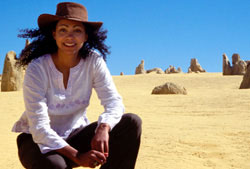
In real life, the actress Liana Cornell –co- star of the Amazon and Sky TV series Britannia – is living off the grid in Cornwall, UK. She is a strong woman – not afraid to turf her boyfriend out of the house while she carries out our zoom interview. And she plays a strong woman in Britannia – a Roman epic set in 43AD and featuring a number of powerful female lead roles. Recently the 31-year-old sat down to discuss her new eco-documentary series, Refugia, with off-grid.net.

The remarkable pledge Liana has made to herself is that all her acting revenue beyond what she actually needs to survive is ploughed back into causes she believes in – including environmental activism – either through her films, of which more in a moment or the activities of the people she makes the films about.

“I’ve done a lot of environmental work throughout my life, and there was this gap between people doing the work and people who could donate. That was where Refugia comes in.” Its a 3 part series on WaterBear which she wrote, shot and presented herself – made to support and draw attention to some amazing environmental initiatives (until now in Australia but in future around the world).

“I wanted to create something to pull back the curtains and show how they are doing the work – truly good work.” She said. “They don’t have the time and funds” to get more funding.

As well as publicising the characters in her eco-series, she also finances them. you see her presenting cash to individuals she meets during the series. “We have helped to buy back a rainforest in North Queensland and replant it; create a seaweed forest and (sequester) Carbon (by growing) hemp.”

“There are 25 different things we have done with that money.” She is particularly excited about Hemp, which has long been illegal but is now being rehabilitated in the new pro-cannabis climate in America, although not in the UK.

Off-Grid living

Liana is from a well-known acting family in Australia, and was brought up in a coastal rainforest town, with much of the property off the grid. “I enjoy the idea of being off-grid – when we had the fires in Australia my family (in different houses) still had electricity and our own water.”

She told me she had found herself in the UK at the start of lockdown last February 2020 – and would have decided to stay anyway – even without the shoot for Britannia series 3. Her significant other used to live in a van, and he now shares the smallholding they found together in a hidden part of UK’s wildest and most remote county.

Liana’s voyage of discovery filming Refugia was also a voyage of self discovery. “I lay in a sleeping bag with a knife on my chest, coyotes and mountain …

Read More »
Tesla to build world’s largest battery
Energy

World’s largest battery in 80 days

Tesla is teaming up with French energy company Neoen to build the world’s largest battery within 80 days in South Australia.

The state has been struggling with energy problems, and in an attempt to stabilise the energy Tesla has made a deal to pay A$50m if they fail to deliver the project on time. The grid-scale battery storage could help to even out price spikes, prevent blackouts and improve reliability across the network.

At a conference in Adelaide, Australia Tesla CEO, Elon Musk said the battery will be more than three times the size of the current record holder. It is a lithium ion battery and will be 100 megawatts, compared to the next largest battery, which is 30 megawatts. Tesla estimates the battery could power 30,000 homes. The 129MWh battery, which is paired with a wind farm, is designed to improve the security of electricity supplies across South Australia.

Musk told reporters in Adelaide this month he is confident in the techniques and design of the system, although it will be challenging: “There is certainly some risk, because this will be the largest battery installation in the world by a significant margin. When you make something three times as big, does it still work as well?”.

In March Musk made his pledge on Twitter the he could deliver the battery within 100 days of signing the contract or it would be delivered free. Jay Weatherill, the South Australia state’s premier, confirmed the deal, which now is a part of the government’s A$550m energy plan.

“I’m thrilled with the selection of Neoen and Tesla, whose experience and world leadership in energy security and renewables will help South Australia take charge of its energy future,” Weatherill said.

On a related theme, read about the South Africa Power Crisis here.

Read More »
Australian tiny home on wheels in outback
Urban

Australians realise they are overhousing themselves

Over a century ago, Australia’s 1911 census registered the average household as 4.5 persons, compared to the average today of 2.6, yet Australian homes have increased a staggering 40 per cent in size since 1984. The average family home has increased from 162 square metres to a whopping 227 square metres.  Just because they can.

Now news articles call on Australia’s middle classes to imagine owning a home under $100k, living completely unplugged, and moving it to a new location in retirement … being debt free in a flexible creative community, with an abundance of leisure time.

Its a big country with a tiny population and consequently, according to the WWF Living Planet Report of 2008, the Australian ecological footprint  on the earth is 2.8. That measure in layman’s terms is that they are using 2.8 times more resources than the earth can sustain.

As well as one of the largest building footprints in the world Australians send out an average of 18 tonnes of carbon per household.

This is all a backlash from the previous century where six or seven people packed in  a 2-bedroom house.

If those stats aren’t enough, Australians are also among the longest commuters in the world, above New York and LA.

Architecturally-designed eco homes, solar-panelled, moveable, self-sufficient, are the new status symbol. Time to relax and enjoy the family, or grow vegetables, instead of being gridlocked in a traffic jam.

It’s all possible. Most baby boomers have moved on from our gas guzzling cars of the 70s and 80s, to smaller, smarter economical ones.

Why wouldn’t they do that with homes when they are not sustainable?  Anyone scrolling through social media or Instagram lately, or watching lifestyle television shows, would be aware of eco or small homes popping up all over the place.

Some look like pods from Mars and others gypsy caravans on wheels, but the trend is being dictated by an awareness of a lower carbon footprint and a foreboding sense of our finite energy reserves.

I hazard a guess here, but nobody in Australia will be selling a 400-square metre home in 10 years’ time!…

Read More »

Living in the Future

An ongoing documentary series celebrating sustainable communities and ecovillages around the world is promoting the off-grid way of life. Living in the Future hosts a free online series, a regular blog and a set of three feature documentaries – Ecovillage Pioneers, Lammas and Deep Listening – which follow the development of ecovillages, and communities, around the world.

Ecovillage Pioneers follows filmmaker Helen Iles’s search to find various sustainable, affordable, alternatives to our modern, consumptive way of life. Her journey takes her to a permaculture village in Australia, small communities in Ireland, Somerset and the Gower Peninsula, the more established Findhorn Foundation in Scotland, and the Centre for Alternative Technology in mid-Wales – all projects that inspired Lammas, the UK’s first legal low-impact settlement.

The second film, Lammas: How To build An Ecovillage, shares the highs and lows of the nine trailblazing families who embarked on the pioneering venture to create their homes and a community while dealing with the nightmares of planning applications. After more than six years of planning and construction, Lammas is now a successful off-grid community, spanning almost 50 acres of depleted pasture land in Pembrokeshire, Wales.

Living in the Future’s online series celebrates the innovative and creative individuals who are finding new ways to build self-sustainable houses, including Rachel Shiamh, who won a Grand Designs Award for her two-storey load-bearing straw-bale home in Wales – the first two-storey load-bearing house in the UK, and only the second in Europe.…

Read More »
Community

Home & Away star goes off the grid

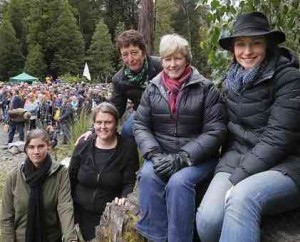
lisa-gormley-anti-fracking-300x242Home and Away’s Lisa Gormley is in the middle of building an off-the-grid eco cabin in the Tasmanian rainforest. She is looking forward to spending more time with her family, including her parents who live on a 20ha farm.

The 30-year-old moved to Tasmania with her parents when she was 12, and recently said she wanted to spend time with her family and travel. Not one to shy away from new challenges, Gormley was one of hundreds of people who gathered in Tasmania’s Upper Florentine Valley in April to rally against the Federal Government’s attempt to reopen some World Heritage-listed forests to logging.

One of Australia’s most popular stars she revealed she would be open to returning to her soapie roots, years after shocking fans with her decision to leave.

Dan Ewing and Lisa Gormley, who played on-screen couple Heath and Bianca, recently reunited on the Home And Away set to film An Eye For An Eye – a spin-off. And the walk down memory lane left both pining for the good old days. “I’d definitely be open to a discussion about coming back, I have to say,” Ewing admits.

“If the (right) storyline was there, I would. I wouldn’t want to play the same old Heath for another three years, though – I’d want it to be fresh and him to have evolved.” At least part of his willingness to return to the role of resident heavily inked bad boy Heath comes down to Archie, his one-year-old son.

Ewing and his wife Marni have been mostly raising their bundle of joy in Los Angeles. It’s a great city, especially for an ambitious actor, but he says nowhere compares to home.

“Having a kid really changes your perspective,” he admits. “The quality of life here in Australia is unique – you can’t find it elsewhere in the world. There are so many opportunities – we’re so lucky.

“But, most of all, I think it’s a dad thing … I’m looking at life for my child. And Marni really misses her family. Skype and FaceTime are great but it can’t beat the joy of seeing your little boy run up to grandma for a big hug.” LA will always be there, too – and technology means an actor doesn’t have to physically live Stateside these days to chase the big time, he says.

Since leaving the show, Gormley has spent a few years travelling, teaching overseas and starring in various stage productions. And the nature-loving performer is in the middle of building an off-the-grid eco cabin in the Tasmanian rainforest.

Gormley is also open to returning to the show that launched her career – just not yet. “I would, but maybe not for another little while because I’ve still got things I want to try,” she says. “I’ve done a lot of things that were on my list – I’m slowly …

Read More »

Ausgrid rip-off

SYDNEY, 29 Oct – POWER USERS IN AUSTRALIA paid for a $40 million substation as part of $1 billion spent on gold-plating electricity infrastructure — and it’s not even hooked up to the grid.

State-owned energy company Ausgrid spent the cash in breach of national electricity guidelines, with the costs passed on to consumers as higher network charges on their quarterly power bills.

The company is planning to spend another $1 billion on pointless upgrades to poles and wires over the next two years, potentially adding a further $502 to the annual family power bill, according to the national regulator.…

Read More »

Unplug for an hour

Small initiatives can sometimes have a big effect, and its that time of year again when Australians are asked to turn up their environmental conscience for just an hour. Earth Hour will be held at 8.30pm on Saturday, March 31. The day will see unplugged community events held across the country.

The hour of no power Everyday Australians will be celebrated for their grassroots contributions to a more sustainable future for the planet in the Earth Hour Awards. …

Read More »
Mobile

Bus around the world

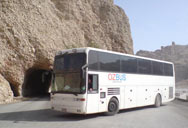
The Ozbus will take you from London to Australia with only one short flight at East Timor. But it takes three months and costs around $7,500 US.…

Read More »
Water

Surviving drought the Ozzie way

Living in the driest continent on earth
Kim -living on world’s driest continent

Australia is in the grip of its worst drought on record — the victim of changing weather patterns attributed to global warming, and a government that is only just starting to wake up to the severity of the position.

The federal government is struggling with expensive proposals to desalinate sea water and recycle raw sewage. Meanwhile some locals have decided to meet the crisis head on.

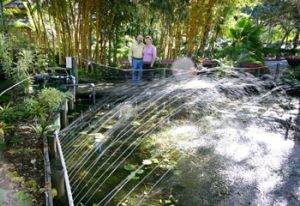
Kim and Paul Roginson of Elimbah in Queensland say if their bore water ran out tomorrow, they would start drinking their recycled sewage water.…

Read More »