

Posts by — Juliette Smith

Top tents
by JULIETTE SMITH on OCTOBER 3, 2007 - 0 Comments in MOBILE
tenter.jpg
So many tents, so little time

The real thing is often exotic – a native American tepee, for example, or Mongolian yurt – and borrowed from nomadic cultures. The top-notch version is usually hand-made from traditional materials to provide room-sized spaces, big enough for beds, or even bathrooms. Some have windows and doors, decorative poles and printed linings (the tent equivalent of wallpaper); a decent tent is dry, waterproof and tough enough to withstand a semi-permanent outdoor life.

The versatility, the magic, of the posh tent, is encouraging campers to swap the standard-issue, two-man dome for a spacious tepee or an Indian Maharaja’s shikar (the latter forms the basis of Camp Kerala, Glastonbury’s 72-tent canvas hotel, offering a weekend of swanky camping for £6,000 a go).

For about £2,500 you can buy your own bespoke shikar and tent-makers Raj Tent Club say most of their customers prefer to do their luxury camping at home.

Party tents can be used as summer houses and work spaces. Yurt-maker Jonathan Morriss, of Bruton Yurts, has sold tents for use as treatment rooms, and even alternative living spaces. An author bought one as a writer’s retreat.

According to Cornwall-based Belle Tents, their round pavilions and mini marquees sell as playrooms, dining rooms and garden rooms, and not to festival-going types but to stockbroker-belt chief executives.

Party tents can be wired, plumbed, heated, and because they are temporary structures, and don’t have foundations, they don’t need planning consent.

You can fill them full of kids, furnish them, light them, and when, you get fed up with the view, you can take them down put them up somewhere else.That’s the magic of party tents.

Little Big Tops

Mini Big Tops, pavilions and jousting tents in striped heavy-duty canvas from 10ft upwards cost from £1,080. (01840 261556; www.belletents.co.uk)

Top tepees

Otherwise known as a wigwam (or native American tent), traditional tepees are made in Devon, by Albion Canvas, and cost from £2,012 for a 16-footer. (01803 762230; www.albioncanvas.co.uk )

Time for Bedouin

The traditional Morroccan tent (known as the maghzen or caidale) made in south-west London by Moussem Tents. Made to measure from £1,500. (020 8947 2281;

www.moussemtents.co.uk )

Past mastery

Medieval, Napoleonic, Civil War and other repro tents made in the Sherwood Forest by Past Tents. Small, 15th-century pavilions from £630. (01623 862480; www.past-tents.demon.co.uk )

Nic Fiddian-Green’s canvas bhurj (right) was a birthday present from his wife, Henrietta. “Originally, she bought me a pretty little pavilion tent,” he says. “But it wasn’t man enough, so I exchanged it for a bhurj, which is more heavy-duty, more wild-style.”

A sculptor (best known for his bronze-cast horses’ heads), Nic has used his tent as a mobile studio, working literally under cover, while his equine models wandered around the field wherever the tent was pitched, But more often it is used as a multi-purpose summer space.

“The kids play in the tent, we often eat in it, and we’ve had countless parties in it,” says Henrietta, who has also used it as a spare room. “So many people have slept in that tent.”

The bhurj was made in India for London tent company, Raj Tent Club. In plain, cream canvas, lined with hand-printed cotton and decorated with “bobbly bits”, it has a central pole. “The sides roll up so you can use it like a giant parasol,” says Nic.

Until recently, the Fiddian-Greens (they have three children) lived in a small cottage, where the tent made a useful garden extension.

“It was particularly useful when we were doing work on the house, giving extra living space to get away from the builders’ mess,” says Henrietta.

In the summer, the tent is sometimes moved from the garden to a sunken wood on the Fiddian-Greens’ land, where it is transformed from dining room or playroom to rustic retreat.

“If the mood takes us, we just migrate to the tent and camp for the night, or the week,” says Nic. “We also take it to Norfolk for summer holidays. It is a very

practical tent.”

* Raj Tent Club: 020 7820 0010; www.rajtentclub.com

Caroline Hawkins’s large, decorative tent was originally bought as “an overspill space for summer visitors”. Her house, Sheldon Manor in Wiltshire, is Grade I-listed (so there was no chance of getting planning consent for an extension) and since the gardens are occasionally open to the public under the National Garden Scheme, she wanted an attractive outdoor “room” that would provide shelter from the sun or, indeed, the rain.

The tent’s first outing, however, was as a disco for her daughters, 16-year-old Amelia and Cordelia, 14. And it has since proved a versatile family space for everything from dormitory to dining room. “It’s like having a summerhouse or lovely conservatory,” says Caroline. “But more glamorous, and much more fun.” Made in India for tent designers White Canvas, Caroline’s rectangular tent is tough, waterproof Scottish canvas, lined with hand-blocked cotton, and supported by traditional poles, guy ropes and pegs.

“It looks right in its setting,” says Caroline, who moves the tent around from orchard to formal garden. “You couldn’t have a nasty cheap tent in the grounds of a historic property.” Not the least bit cheap, Caroline’s tent cost the best part of £4,000.

For teenage discos she installs wooden floors, flashing lights and a sound system; for dinner parties, she puts down Persian rugs, under tent-friendly tables and chairs.

Her daughters’ overnight guests usually get camp beds, but Caroline is looking for a portable four-poster for grown-ups. “We have a lot of visitors and I’d like to make the tent a really comfortable place to stay,” she says.

* White Canvas: 0870 321 3007; www.whitecanvastents.com .

When Emily Edgell’s mother, Jane, moved into a one-bedroom cottage in Dorset, she had a problem: where was she going to put her daughter? Emily, a school boarder, needed a room to come home to. So Jane bought her daughter a yurt.

At about pounds 3,500, the yurt was not only cheaper than a loft conversion but, says Jane, it provided an independent space for a growing teenager. Emily, now 18 and studying for A-levels, has been living in her yurt more than two years.

“I like the fact that it’s out of the ordinary,” she says. “My friends at school think I’m mad, but they’re all very intrigued and they love it when they see it.” She has managed to squeeze 10 overnight guests into her 14ft home.

It was custom-made by the Dorset-based Bruton Yurt Company. A circular construction with a little pitched roof, it is self-supporting (no poles or pegs), and consists of a latticed timber frame

covered in foil insulation, sandwiched between two layers of canvas.

The yurt sits on a wooden deck in the garden about 30 metres from home, and has two windows, a wood-burning stove, a little “pixie-ish” chimney, wooden doors and a canvas porch. In other respects, it is just like any other teenage bedroom: a double bed, sheepskin rugs on fitted carpet, a wide-screen TV, feathers, fairy lights, clothes everywhere. “It’s very girly,” says Emily.

“I think I could easily be seduced into swapping my yurt for four walls and central heating,” she admits. “But if it was bigger, better insulated, and had running water, I could probably live in it for ever.”

* Bruton Yurts Company: 01963 31955; www.brutonyurts.com

The Battle of the Benders
by JULIETTE SMITH on AUGUST 15, 2007 - 0 Comments in LAND, OFF-GRID 101
How to live off-grid book cover
Buy it now

The Off-Grid web site is serialising Nick Rosen’s book, How to Live Off-grid: Journeys Outside the System In this excerpt Nick visits an off-grid community in Devon which is fighting a planning permission battle – on behalf of all of us – for the right to buy some land and build off-grid, low-impact houses. The public enquiry has just finished and the residents of the Benders are awaiting the fateful decision later this year. Now read on.

Land Matters: a question of permission

I contacted the Land Matters commune in Allaleigh, Devon, via an activist group that helps off-gridders and others win planning permission for their living spaces. I spoke to Charlotte, one of the main organisers, (more…)

Big Water
by JULIETTE SMITH on NOVEMBER 29, 2005 - 1 Comment in WATER
industrial supply
They spray. We pay

TV and papers emphasise what individuals can do about global warming — save energy by energy savings method, save water, walk to work.

But if industry would mend its profligate ways, we wouldn’t have an environmental problem in the first place. Government joins in the chorus, blaming voters but not themselves, and never once criticising industry.

The water industry is a case study of waste on a grand scale. All those rotten 19th century water pipes leak around 25% of household consumption every day in the UK, and similar amounts in other “advanced” economies. The electricity generation and distribution industry is no better, with 50% of all electric power supply lost in the system according to the London Sunday Times. (more…)

Microgrids
by JULIETTE SMITH on OCTOBER 14, 2005 - 1 Comment in ENERGY

Berkeley
Berkeley Labs’ microgrid boffins

Microgrids promise reliable, efficient, environmentally-friendly electricity in a ‘peer-to-peer’ network:
In 1996, a sagging power line in Oregon brushed against a tree, and within minutes 12 million customers in eight states lost power supply. Such is the vulnerability of today’s power grid. To address this, Berkeley Lab research scientists developed a cluster of small, on-site power generators serving offices, industry, homes.
The system designed to shoulder the US growing thirst for electricity without building the 1,000 new power plants required to meet demand, will lead to a revolution in the way we can live green.
(more…)

Jamie Oliver’s Camper Van Adventure
by JULIETTE SMITH on APRIL 13, 2005 - 0 Comments in FOOD, MOBILE, OFF-GRID 101

TV chef Jamie Oliver goes off-grid
TV chef Jamie Oliver to go off-grid alone

So it IS true.

We broke the story TV chef Jamie Oliver ‘s production company denied — and today it was confirmed.

On 24 Feb we announced that Jamie was going to live in a camper van in Italy for his next series. Today he set off on his trip. We wish him well.

Jamie Oliver and wife Jools make a meal of their tearful farewell – as he set off on the six-week cooking tour. The gossip in London’s Primrose Hill is that Jamie is not a happy man. Whether his marriage is truly on the rocks or it is being done for the benefit of the cameras remains to be seen.

Jamie has become a national hero since he reinvented school food, and a knighthood cannot be far off.

Now he will reinvent off-grid cooking. A new TV show will follow Oliver on a trip round Italy in a converted camper van carrying all his kitchen kit.

It is no coincidence at all that Sainsbury’s is overhauling its Italian food range under the single banner of Simply Italian. (more…)

Off-grid living made easy
by JULIETTE SMITH on OCTOBER 7, 2004 - 1 Comment in FOOD, LAND, OFF-GRID 101

We will bring you details of job opportunities and advice on every area of off-grid living as well as off-grid books like this one: Eating Off the Grid: Storing & Cooking Food Without Electricity: 1

Help and advice to get started
by JULIETTE SMITH on OCTOBER 5, 2004 - 0 Comments in COMMUNITY, FOOD

Professional help is available whether what you need is advice on which solar panels to buy, or how to build the most eco-friendly and efficient house.

Ecoarc drawing
Drawing of eco house by Ecoarc

(more…)

Greenbuild Expo
by JULIETTE SMITH on OCTOBER 4, 2004 - 0 Comments in COMMUNITY, LAND

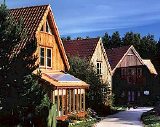
Greenbuild International Conference and Expo 2004 in Portland, Oregon on 10th to 12th November – 3 days of workshops, talks and exhibitions for anyone involved in green building. There’ll also be tours of green buildings.
Exhibition

Fees vary depending on how many events you want to attend.
For more information and registration see the website

How to grow a vegetable garden
by JULIETTE SMITH on OCTOBER 4, 2004 - 0 Comments in FOOD, LAND

10 easy steps to start a vegetable garden

- Select a good spot for your garden: make sure the soil’s well drained, not too shallow, not too rocky and avoid shady areas. Remember vegetables can be grown on terraces too.

The Garden

(more…)

Creative Commons license, which allows you to utilise all the information on this site for non-commercial purposes, providing you credit the information with the word 'off-grid.net', which should be written as one word and accompanied by a link to our web site.
View our creative commons license. View our Privacy Policy.

Vivum Intelligent Media Ltd. 2009
17 Scawfell Street
London E2 8NG

email nick (at) off-grid.net,
call US office:
toll-free 1-877-706-7423
OR
UK +44 207 729 2749